I’ve been around farming most of my life.
I grew up (and still live) in Wisconsin, in the heart of Dairyland. My father was a veterinarian, and early memories are following him along to farms as he did his vet work.
In my work as a CFO, I’ve been involved in farming as well, at least on a limited scale.
Accounting for farms is difficult because of self-raised animals, seasonal inventory swings, habitual “horse” trading, long crop cycles, etc. It would be easy to throw your hands in the air and say, “It’s impossible to do good accounting in a farm environment.”
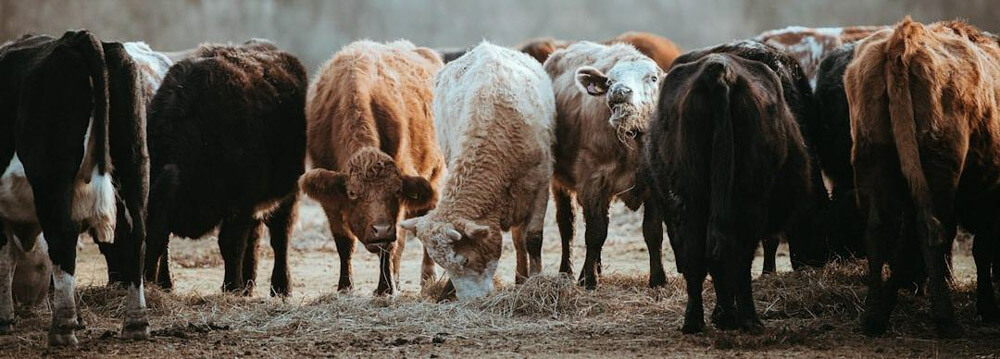
So when we signed up to provide CFO oversight for a feedlot in Southwest Kansas, my expectations were undoubtedly low.
However, these low expectations were quickly exceeded.
I remember looking at cattle reports and noting feed cost assigned to each group of cattle.
“How do you determine what feed cost to assign to each group?” I asked.
“We track in our accounting system how many pounds we feed each group each feeding. That comes out of inventory and goes to the cost of that group of cattle.”
“Whoa, what?!”
I was shocked. Companies in far more controlled environments balk at far less exact tracking metrics.
Yet that is exactly what they were doing. Tracking feed by the pound fed to each of a 100+ groups of cattle every day. They had an ERP system designed for the task, people trained to use the system, and a controller to fix any issues that came up.
Coming away from that, I concluded several things:
- Virtually any situation can be accurately tracked.
- You just need 3 things:
- Effective software.
- Committed people.
- Someone to oversee the whole thing.
Simple, right?